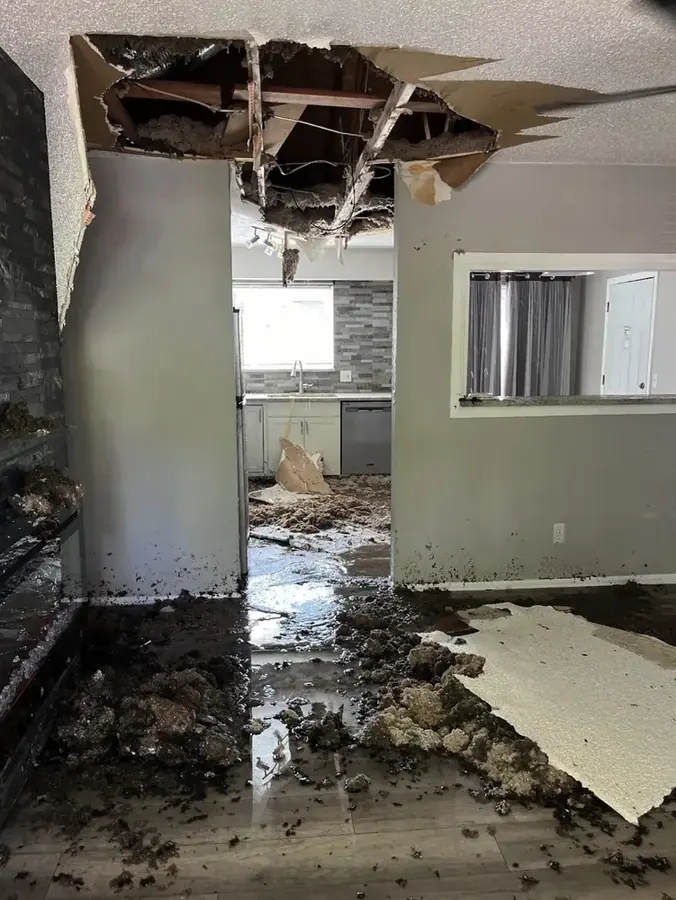
In North Hollywood's dense mix of apartments and condos, water rarely stays where it starts. An upstairs unit's supply line, overflowing toilet, tub, or AC pan lets go, and within minutes the ceiling of the unit below is bulging, dripping, and darkening around the light fixture. This between-unit ceiling leak is the signature water problem in NoHo multifamily buildings, and it needs two things at once: fast drying and clear documentation.
Why between-unit leaks are their own problem
A ceiling leak from the unit above is different from a roof leak, which comes from the exterior envelope. Here the water source is plumbing on another floor, so stopping it means coordinating with a neighbor, and drying it means treating two ceilings, walls, and floors as one connected job.
- Saturated ceiling drywall that sags and can collapse if left wet.
- Water tracking into recessed lights and electrical boxes.
- Wet insulation above the ceiling that dries very slowly.
- Flooring and baseboards in the upstairs unit soaking at the source.
- Hidden moisture wicking into shared wall assemblies.
Electrical and safety steps first
Water and light fixtures are a dangerous mix. Before anything else, crews check for water sitting in ceiling electrical, and crews keep affected circuits off until the area is safe. The federal guidance on staying safe around water and power is summarized by Ready.gov.
- Assess ceiling fixtures and junction boxes for trapped water.
- Controlled drain points to relieve a bulging ceiling safely.
- Extraction of standing water with the water extraction team.
- Protection of belongings in both the upper and lower units.
You can preview a likely cost range on the cost calculator while crews are on the way.
Drying both sides and documenting the claim
Because two units are involved, crews dry the source floor and the ceiling below together, following the drying standards published by the IICRC. Crews also photograph and log every reading, which is what the building manager or HOA needs to sort out responsibility between tenants and owners.
- Full structural drying of ceiling, walls, and floors.
- Moisture logs and photos for the building and HOA claim.
- Coordination between both tenants to schedule access.
- Support for larger buildings from the commercial and multi-unit crew.
Not sure how many drying days to expect? Check the drying time estimator.
Reducing the odds of the next ceiling leak
Between-unit leaks repeat in the same buildings because the same fixtures and AC pans keep failing. A little awareness upstairs and down goes a long way, and you can gauge your unit's exposure with the water risk profiler.
- Ask the upstairs neighbor to watch supply lines under sinks and toilets.
- Keep an eye on AC condensate pans during hot Valley summers.
- Report the first small ceiling stain before it spreads.
- Know where the building shutoff is for a fast response.
A sagging wet ceiling can drop without warning. Get it drained and dried today.
☎ Call (747) 850-6138Fast response for the NoHo Arts District and Lankershim corridor
The apartment and condo blocks around the NoHo Arts District and along the Lankershim Boulevard corridor see between-unit ceiling leaks more than almost anywhere in the Valley. If your ceiling is dripping from the unit upstairs, get a documented estimate started on the cost calculator and call right away.