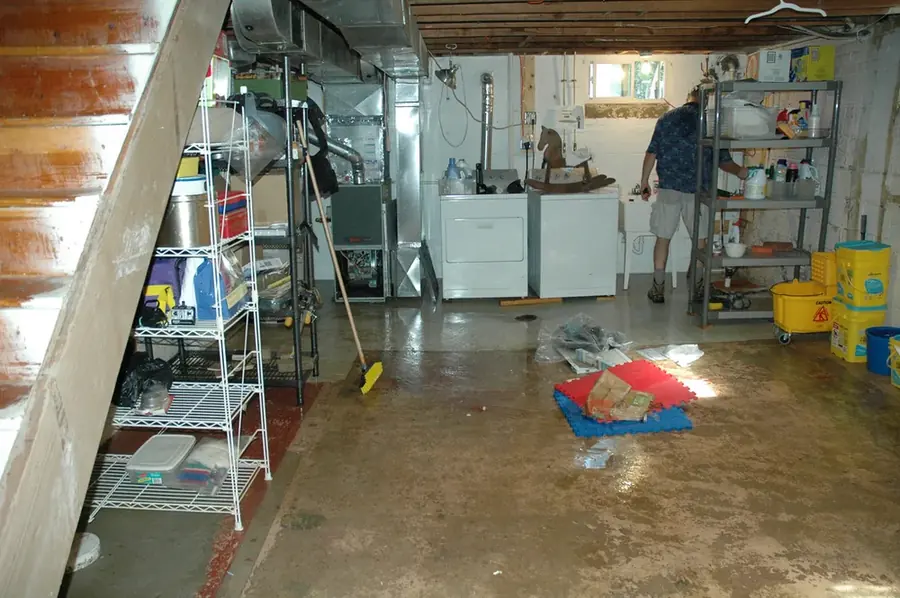
Appliance leaks are quiet. In North Hollywood kitchens and dense apartment laundry closets, a dishwasher, a washing machine, or a refrigerator ice-maker line can seep for days before a warped floorboard or a musty smell finally gives it away. By then the water has spread under the cabinets, into the subfloor, and sometimes down to the unit below. Because the leak is tucked behind or under a heavy machine nobody moves, it hides in exactly the spot you never check. The trick is finding every wet path, not just wiping up what shows on the surface.
Find the source and the full soak
Water hides. Crews start at the appliance, confirm where it is coming from, then map how far it has traveled with meters and imaging so nothing gets left wet under a cabinet or a floor.
- Pull the washer, dishwasher, or fridge to inspect the valve, hose, and pan.
- Moisture-map the toe-kick, cabinet bases, subfloor, and the shared wall.
- Check the ceiling of any unit directly below for a traveling leak.
- Trace the water line and drain connection to confirm the exact failure point.
- Extract standing water from under the cabinet run and the floor.
- Flag whether it is a clean supply leak or a drain-line issue.
Braided vs old rubber hoses
Most sudden appliance floods trace back to a hose. The old black rubber washing-machine hoses go brittle with heat and age, then split, and a burst one can pour water for hours while you are at work. The EPA points out how much a small unattended leak wastes over time, and a failed hose is the extreme version of that same problem.
- Replace old rubber supply hoses with braided stainless lines.
- Check the age of the dishwasher and ice-maker connections too.
- If a line burst outright, that overlaps with burst pipe water damage.
- Try the water-risk profiler to spot your weak points.
Dry it fully so nothing lingers
A soak under cabinets is stubborn because air does not reach it and the moisture sits trapped against wood and subfloor. Crews open the toe-kick, set targeted drying into the cavity, and monitor daily against IICRC standards so the cabinet bases and subfloor come back dry all the way through, not just dry on top.
- Cabinet and wall-cavity drying with directed airflow and dehumidification.
- Daily moisture readings on the floor, cabinets, and any wall shared with a neighbor.
- Extraction backup from the water extraction and removal crew when the spread is large.
- Full documentation for your claim from source to dry standard.
The longer an appliance soak sits, the more cabinet and subfloor you replace. Catching it early keeps the fix small.
☎ Call (747) 850-6138Kitchens and laundry closets across NoHo
In the condos and apartments off Magnolia Boulevard, laundry hookups and dishwashers often back to a shared wall, so a slow leak in one unit shows up as a stain in the next. If you have found a soft floor or a damp cabinet, get a sense of the scope first on the cost calculator, then call.