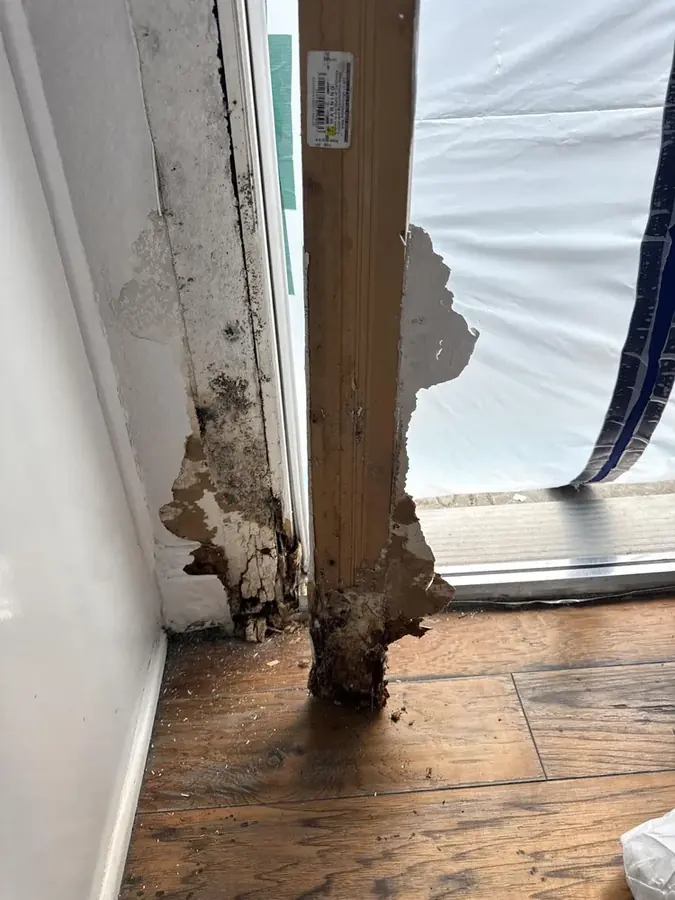
A corroded pipe leak rarely announces itself the way a burst line does. In many North Hollywood bungalows and small apartment courts built before 1980, the original galvanized-steel supply and cast-iron drain lines have been rusting inside the walls for decades. The water shows up slowly as a musty smell, a soft drywall patch, a rust-colored stain, or a drop in pressure at the kitchen tap on a hot Valley afternoon.
Why aging galvanized pipe fails in NoHo homes
Galvanized steel corrodes from the inside out. The zinc coating wears away, rust builds up, and the pipe wall thins until a pinhole or seeping seam forms behind the plaster. Because the leak is small and constant, it soaks framing and insulation long before anyone notices.
- Rust flakes and mineral scale that choke flow and lower pressure.
- Pinhole seeps at threaded joints where the wall is thinnest.
- Cast-iron drain lines that crack and weep between the studs.
- Warm interior wall cavities that hide moisture through the summer.
- Copper repairs joined to old steel, which speeds galvanic corrosion.
How crews trace and mitigate the hidden leak
The first job is finding the source without tearing the house apart. Crews use moisture meters and thermal imaging to map the wet cavity, then open the smallest necessary access to confirm the failing line. This is different from a sudden burst pipe, which floods fast, and from a slab leak under the floor. A corroded line leaks slow and high, inside the wall.
- Non-invasive moisture mapping to outline the wet zone.
- Targeted access cuts to expose the corroded section.
- Coordination with your plumber for the pipe repair or repipe.
- Documentation and photos to support your insurance claim.
You can estimate a repair range on the cost calculator before crews arrive. For guidance on catching household leaks early, the EPA offers a practical checklist at EPA WaterSense.
Drying the wall cavity the right way
Once the water is stopped, the wet framing and cavity have to be dried to standard, not just wiped down. Crews follow the drying practices published by the IICRC and pair extraction with structural drying so the wall does not stay damp behind fresh paint.
- Extraction of standing water with the water extraction crew.
- Cavity drying with air movers and low-grain dehumidifiers.
- Full structural drying monitored to a dry standard.
- Daily moisture readings until the framing reads dry.
Want a realistic dry-out window for your home? Try the drying time estimator.
Catching the next hidden leak early
If one galvanized run has failed, others in the same home are often close behind. A few simple habits help you spot the next slow leak before it soaks the framing, and you can gauge your overall exposure with the water risk profiler.
- Watch for gradual pressure drops at more than one fixture.
- Note rust-tinted water after the taps sit unused overnight.
- Check inside vanity and sink cabinets for damp back walls.
- Have older galvanized supply lines inspected before a repipe decision.
Slow leaks do the most quiet damage. Catch it now before the framing rots.
☎ Call (747) 850-6138Serving the older streets around Toluca Lake and Camarillo Street
Many homes near Toluca Lake and along the pre-war blocks off Camarillo Street still run their original galvanized plumbing, so a corroded pipe leak is a call crews take often in this corner of North Hollywood. If you have spotted a creeping stain or a pressure drop, price the mitigation on the cost calculator and reach out.