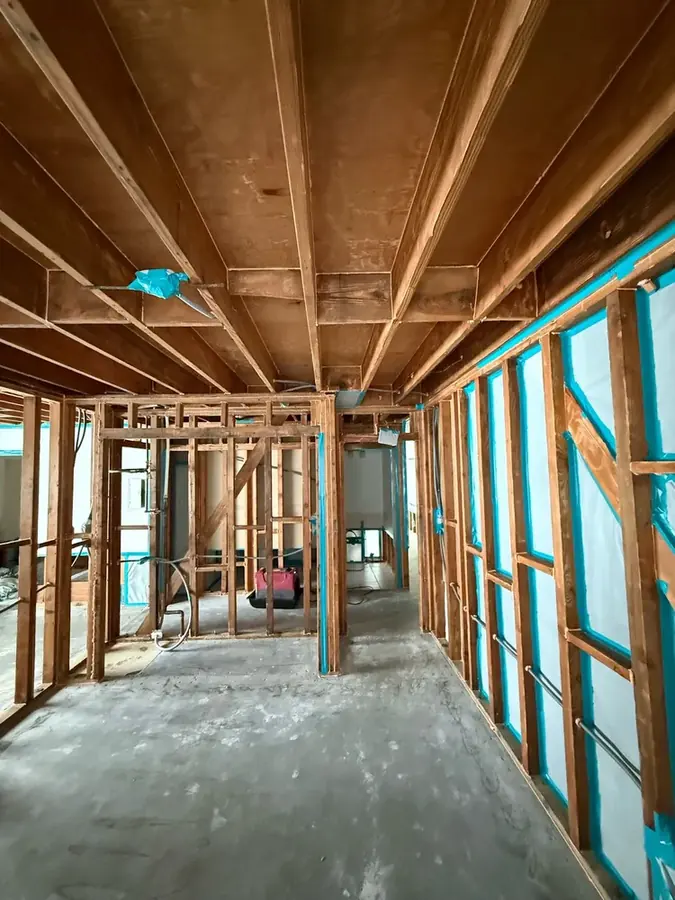
A roof leak comes from the outside in. On North Hollywood's many low-slope and flat roofs, worn flashing, cracked seams, and clogged drains let winter storm water pond and work its way into the attic. The damage often shows up far from the actual breach, staining a ceiling in a back bedroom while the real gap sits over the hallway. Getting a tarp up and drying the attic quickly is what keeps a small leak from spreading through the whole home.
Why Valley roofs leak
Flat and low-slope roofs shed water slowly, so any weak point becomes a problem when a storm rolls through. This is different from an interior between-unit ceiling leak, where the water comes from plumbing on the floor above. A roof leak starts at the exterior envelope.
- Worn or lifted flashing around vents, chimneys, and skylights.
- Cracked or blistered seams on aging flat-roof membranes.
- Ponding water from clogged roof drains and scuppers.
- Wind-lifted shingles and tiles after a Valley storm.
- Attic intrusion that soaks insulation and ceiling drywall.
Emergency tarp and stopping the intrusion
The first priority is keeping more water out. Crews install an emergency tarp over the breach so the interior can dry while a permanent roof repair is scheduled. For timing your response around incoming weather, the National Weather Service Los Angeles office posts local forecasts at weather.gov/lox, and storm-readiness steps are outlined at Ready.gov.
- Emergency tarp to seal the breach against the next storm.
- Extraction of standing water with the water extraction crew.
- Removal of saturated insulation that can no longer dry.
- Coordination with your roofer for the permanent fix.
You can size up the likely cost on the cost calculator before crews arrive.
Drying the attic and ceilings
Attic spaces trap heat and moisture, so wet framing and drywall dry slowly without help. Crews set air movers and dehumidifiers to pull moisture out of the attic and the ceiling below, and crews monitor to a dry standard. Broader storm impact is handled by the storm damage restoration team.
- Full structural drying of attic framing and ceilings.
- Targeted drying of wet insulation and roof decking.
- Daily moisture readings until the structure reads dry.
- Photos and logs to support your insurance claim.
Curious how many days your attic will need? Try the drying time estimator.
Getting ahead of the next storm
Roof leaks tend to return at the same weak points each rainy season. A quick seasonal check helps you catch trouble before the next front arrives, and you can gauge your home's exposure with the water risk profiler.
- Clear roof drains and scuppers before winter storms.
- Look for lifted flashing around vents, skylights, and the chimney.
- Check the attic with a flashlight for fresh staining after rain.
- Address ponding spots on a flat roof before the membrane cracks.
Another storm will find the same gap. Get a tarp up and the attic dried now.
☎ Call (747) 850-6138Roof and attic response near Sherman Oaks and the Chandler greenway
The flat and low-slope roofs on homes near Sherman Oaks and along the Chandler Boulevard greenway take a beating in winter storms, and attic intrusion is a call crews answer often across North Hollywood. If a ceiling stain is spreading after rain, price the tarp and dry-out on the cost calculator and reach out.