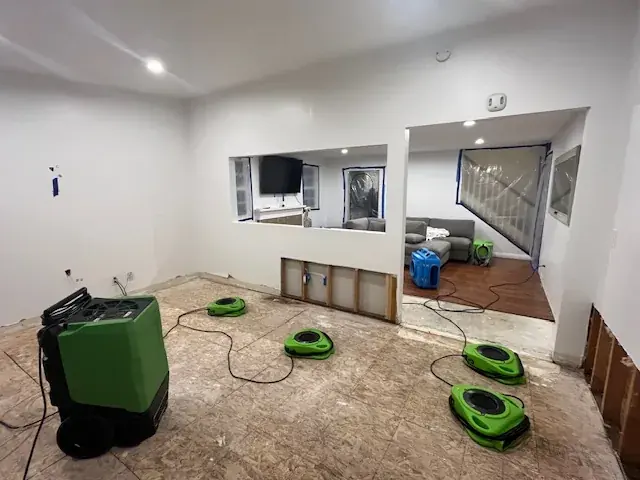
Structural drying is where a water loss is actually finished, and it is more science than muscle. A floor can feel dry to your hand while the slab, the bottom plate, and the wall cavity behind the baseboard are still holding water. In North Hollywood that matters, because the pre-1980 slab homes and old plaster walls hold moisture in ways newer construction does not. Crews dry to a number, not a feeling.
Why surface-dry is not dry
Materials release water slowly from the inside out, so the surface dries first and fools the eye. Left there, that trapped moisture warps floors and breaks down drywall over the following weeks.
- A slab can read wet for days after the surface looks and feels fine.
- Old lath-and-plaster walls off Magnolia hold water behind a dry face.
- Hardwood cups and crowns when it is left to dry on its own.
- The IICRC drying standards define a verified dry target rather than a guess.
Air movers and LGR dehumidifiers, working as a system
Drying is a balance of airflow, heat, and humidity. The two pieces of equipment do different jobs and only work when they are set together correctly.
- Air movers push a thin, fast layer of air across surfaces to lift moisture into the room.
- Low-grain-refrigerant dehumidifiers then pull that moisture out of the air so it does not resettle.
- Crews place units by the water map, so a room off extraction dries evenly, not in patches.
- The Valley heat helps in summer, but AC load and humidity swings mean crews adjust the setup daily.
Daily moisture mapping to a verified standard
The only way to know a home is dry is to measure it, every day, against a dry reference reading. That is what separates real drying from just running fans.
- Crews set a dry goal from an unaffected area and track each wet spot toward it.
- Meters and probes read inside the slab, framing, and drywall, not just the surface.
- Crews adjust equipment daily and pull it only when readings confirm dry.
- Fixing the leak that caused the loss keeps the next one small; the EPA WaterSense guide helps you spot household leaks.
- See how drying time is estimated with the drying-time estimator, or scope the loss with the cost calculator.
Floor still damp after a leak? Structural drying stops hidden moisture before it warps your home.
☎ Call (747) 850-6138Drying older slab and plaster homes in the NoHo Arts District
The 1940s and 1950s homes around the NoHo Arts District and Valley Village were built on slab with plaster walls that trap water long after the surface dries. Local crews map moisture in these homes daily so crews pull equipment only when the structure truly reads dry. See a ballpark for your loss with the cost calculator.